What Is Vocal Support?
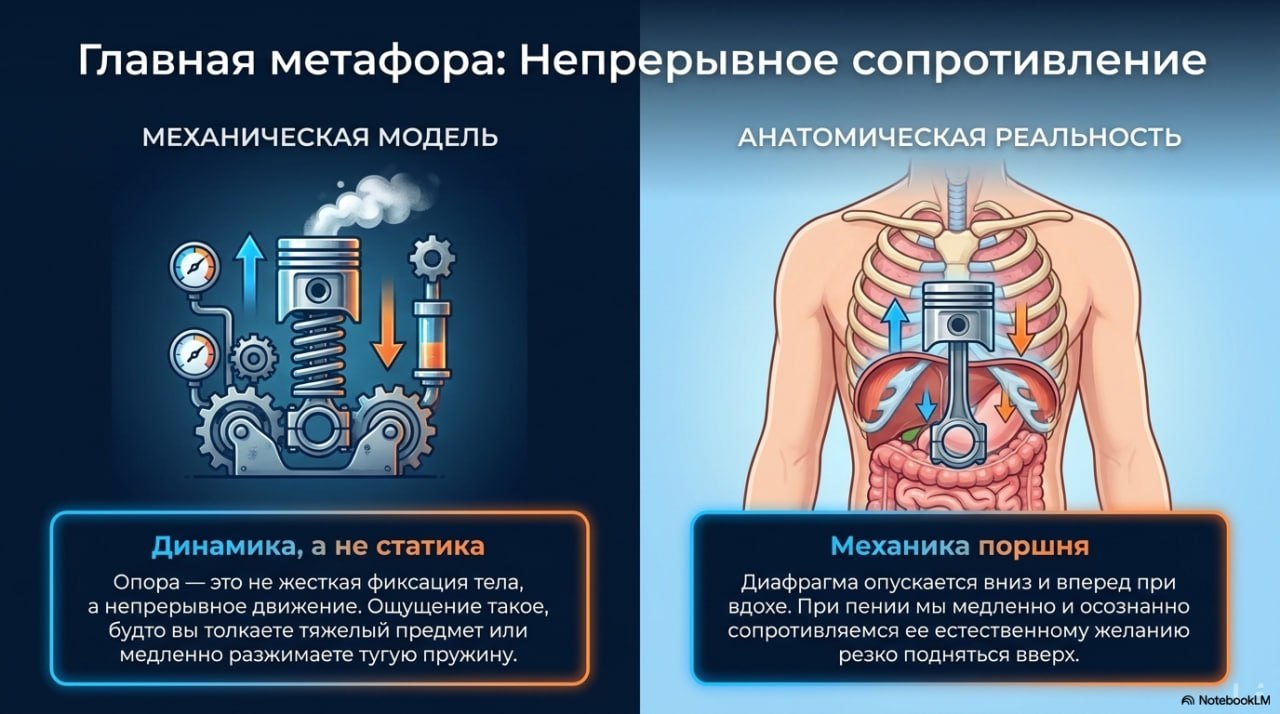
Main Metaphor: Continuous Resistance

The key metaphor is continuous resistance.
Support is a dynamic sensation: as if you were gently pushing a heavy object or slowly compressing a tight spring. Inhalation moves the diaphragm down and forward; while singing, we do not lock the body, but gradually and consciously resist its natural tendency to rise sharply upward.
Trial lesson
Want to understand what your voice can do?
Book a diagnostic trial lesson with a teacher: we’ll listen to your voice, highlight your next steps, and suggest a clear plan. It costs nothing and doesn’t commit you to anything.
No payment, no pressure
Related materials

Why Your Voice Shakes When Singing: Physiology and How to Stop It
When a singer sustains a long note and the sound begins to vibrate or break involuntarily, audio-analysis software may detect abnormal jitt…


Complete Vocal Technique (CVT): A Modern Science-Based Approach to Voice
Traditional vocal training still contains many vague metaphors: “send the sound into the dome,” “sing on a smile,” or “feel a column of air…

How to learn to sing from scratch: a simple guide for future vocalists
Any adult can learn to sing, regardless of age or starting level. The voice is not a closed club for the chosen few, but a physiological in…

How to Recover Your Voice After Vocal Strain and Release Throat Tension Safely
What to do when your voice becomes hoarse, strained, or disappears after heavy use: voice rest, key mistakes to avoid, gentle breathing, an…

How to Sing Beautifully: A Beginner-Friendly Guide
A practical beginner’s guide to developing your voice, breath coordination, pitch, and vocal freedom safely and without unnecessary tension.

How to Get Your Voice Back: A Step-by-Step Guide to Safe Vocal Recovery
What to do when your voice becomes hoarse or disappears: warning signs, voice rest, gentle breathing, and a cautious return to sound withou…