How to learn to sing from scratch: a simple guide for future vocalists
Any adult can learn to sing, regardless of age or starting level. The voice is not a closed club for the chosen few, but a physiological instrument that can be trained carefully and consistently.
Let us look at the mechanics of sound in simple words and see where to begin at home so singing becomes cleaner, freer, and safer for the vocal folds.

1. The main vocal rule: sing as easily as you speak
In professional vocal training there is a simple reference point: singing should feel as natural and unforced as calm speech. A beginning singer does not need to chase volume, vibrato, or dramatic high notes on the first day. The first task is to notice whether the throat stays comfortable while sound appears.
Comfort check: if you feel scratching, dryness, pain, or a need to clear your throat during singing or warmups, the throat is probably tightening. Stop, drink a little warm water, release the shoulders, and try the same phrase more quietly and softly.
Consistency matters more than long sessions: you do not need to sing for hours. For beginners, short daily practice is more useful and safer than rare exhausting workouts. Start with 10-15 minutes a day and keep the voice fresh.
2. Three foundations of free singing
For the voice to sound steady, bright, and effortless, three elements need to work together: breath support, acoustic focus, and freedom in the articulators.
Step 1. Breath support
To keep sound dense and stable on longer notes, do not push air with the throat. The voice needs support: coordinated work of the abdomen, lower back, and lower ribs.
How to feel it: take a calm inhale through the nose so the lower ribs gently widen to the sides, while the shoulders stay down. As you sing, keep the ribs comfortably wide instead of letting the chest collapse at once. This creates steadier air pressure under the vocal folds.
For more detail on support and resonance, read our guide to a loud and strong voice.
Step 2. Natural brightness
For the voice to carry without shouting, it needs acoustic focus. Try imitating a bright, slightly whiny childlike cry or a small ringing meow. You may feel the sound gather forward and become lighter and clearer. This bright component helps the vocal folds avoid unnecessary heaviness.
Step 3. Free jaw and lips
A locked jaw traps the sound. During singing, the lower jaw should drop freely down and slightly back. Do not clench the teeth or lift the chin toward high notes. Active lips and tongue help the sound leave the mouth clearly and reduce strain in the throat.
3. A simple 10-minute daily warmup
Do this short routine before moving to your favorite songs. Keep the volume moderate and stop if the throat feels irritated.
- Lip trill. Relax the lips and blow gently through them so they vibrate on a soft "brrr." Glide the sound up and down without pressure. This warms up the vocal folds and connects the breath.
- Snake hiss. Take a calm inhale into the ribs and release a long, steady "sss" for 15-20 seconds while keeping the ribs open. This trains exhale control.
- Voiced consonants. Make soft, even sounds on "vvvv" or "zzzz" on one comfortable pitch. The consonant gives the airflow a gentle buffer and protects the voice from a hard attack.
- Easy vowels. Sing one calm note on "ee," "oo," or "ah" for 5-7 seconds. Keep the neck free and let the sound stay steady rather than loud.
4. How to start singing songs from scratch
After a short warmup, move to songs gradually. The goal is not to impress yourself with difficulty, but to find a melody that lets the voice coordinate without panic.
- Choose a comfortable range. Do not begin with songs full of extreme high notes. Start with slower, simpler music that sits close to your speaking range.
- Sing at a comfortable volume. Avoid trying to fill the whole room immediately. First find accurate pitch and a relaxed throat at medium volume.
- Record yourself. The inner ear hears your voice differently from how other people hear it. A quick phone recording shows where the sound flows freely and where old tension appears.
Frequently asked questions
Can you learn to sing if you do not have natural musical hearing?
Answer: Absolute pitch is not required for singing. In most cases, inaccurate notes come not from the ear itself, but from weak coordination between hearing and the muscles of the larynx. The brain hears the pitch, but the vocal folds have not yet learned to adjust to it. This coordination can improve within weeks of simple practice.
How much time should a beginner practice each day?
Answer: For beginners, 15-20 minutes a day is enough. The voice uses small, sensitive muscles, so regular short sessions usually bring steadier progress than rare two-hour marathons.
Which genres are easiest for a beginner?
Answer: Acoustic pop, singer-songwriter songs, soft soul, and bossa nova in a moderate tempo are often comfortable starting points. The main criterion is simple: the melody should be smooth and should not jump to notes at the edge of your range.
Practical voice review
If you have wanted to start singing for a long time but still doubt yourself or do not know how to approach the voice, come to a free 30-minute online trial lesson. We will get acquainted, define your vocal goals, find the likely causes of tension, and choose comfortable exercises for the songs you love.
Trial lesson
Want to understand what your voice can do?
Book a diagnostic trial lesson with a teacher: we’ll listen to your voice, highlight your next steps, and suggest a clear plan. It costs nothing and doesn’t commit you to anything.
No payment, no pressure
Related materials
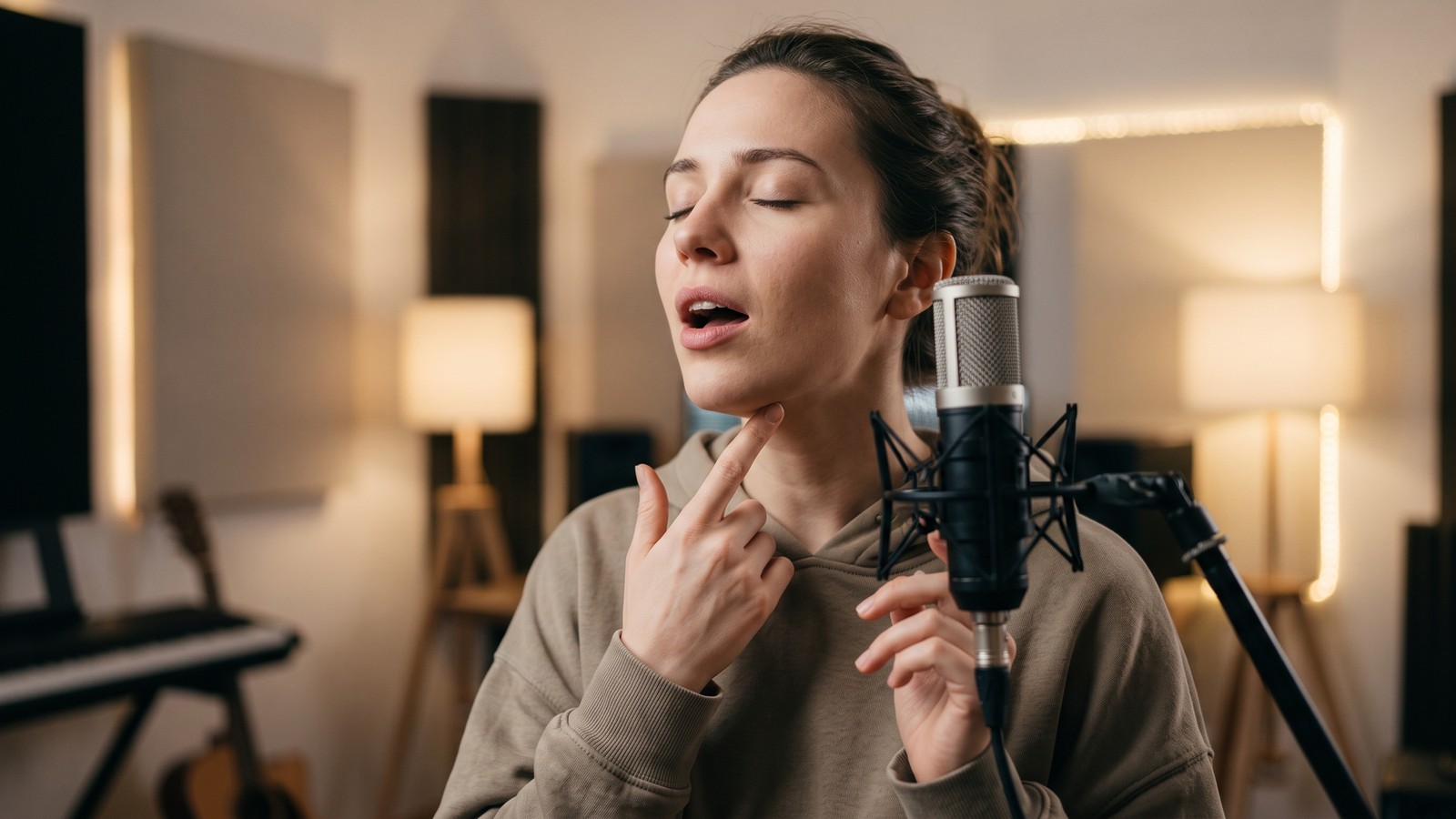
Why Your Voice Shakes When Singing: Physiology and How to Stop It
When a singer sustains a long note and the sound begins to vibrate or break involuntarily, audio-analysis software may detect abnormal jitt…

Complete Vocal Technique (CVT): A Modern Science-Based Approach to Voice
Traditional vocal training still contains many vague metaphors: “send the sound into the dome,” “sing on a smile,” or “feel a column of air…

How to Recover Your Voice After Vocal Strain and Release Throat Tension Safely
What to do when your voice becomes hoarse, strained, or disappears after heavy use: voice rest, key mistakes to avoid, gentle breathing, an…

How to Sing Beautifully: A Beginner-Friendly Guide
A practical beginner’s guide to developing your voice, breath coordination, pitch, and vocal freedom safely and without unnecessary tension.

How to Get Your Voice Back: A Step-by-Step Guide to Safe Vocal Recovery
What to do when your voice becomes hoarse or disappears: warning signs, voice rest, gentle breathing, and a cautious return to sound withou…
Singing Lessons for Adults: How to Start from Scratch and Stop Feeling Shy
Can you start vocal training as an adult? This guide addresses common beginner fears, explains how modern singing lessons work, and explore…