Why Your Voice Shakes When Singing: Physiology and How to Stop It
When a singer sustains a long note and the sound begins to vibrate or break involuntarily, audio-analysis software may detect abnormal jitter (variations in the fundamental frequency) and shimmer (variations in amplitude). To the ear, this sounds like instability and a loss of control over the vocal mechanism.
If your voice consistently shakes when you sing, the cause is almost never naturally weak vocal folds. More often, it results from uncoordinated breathing, tension in the articulators, and a loss of stable acoustic space.
1. Anatomical Factors: Why Your Voice Shakes When Singing
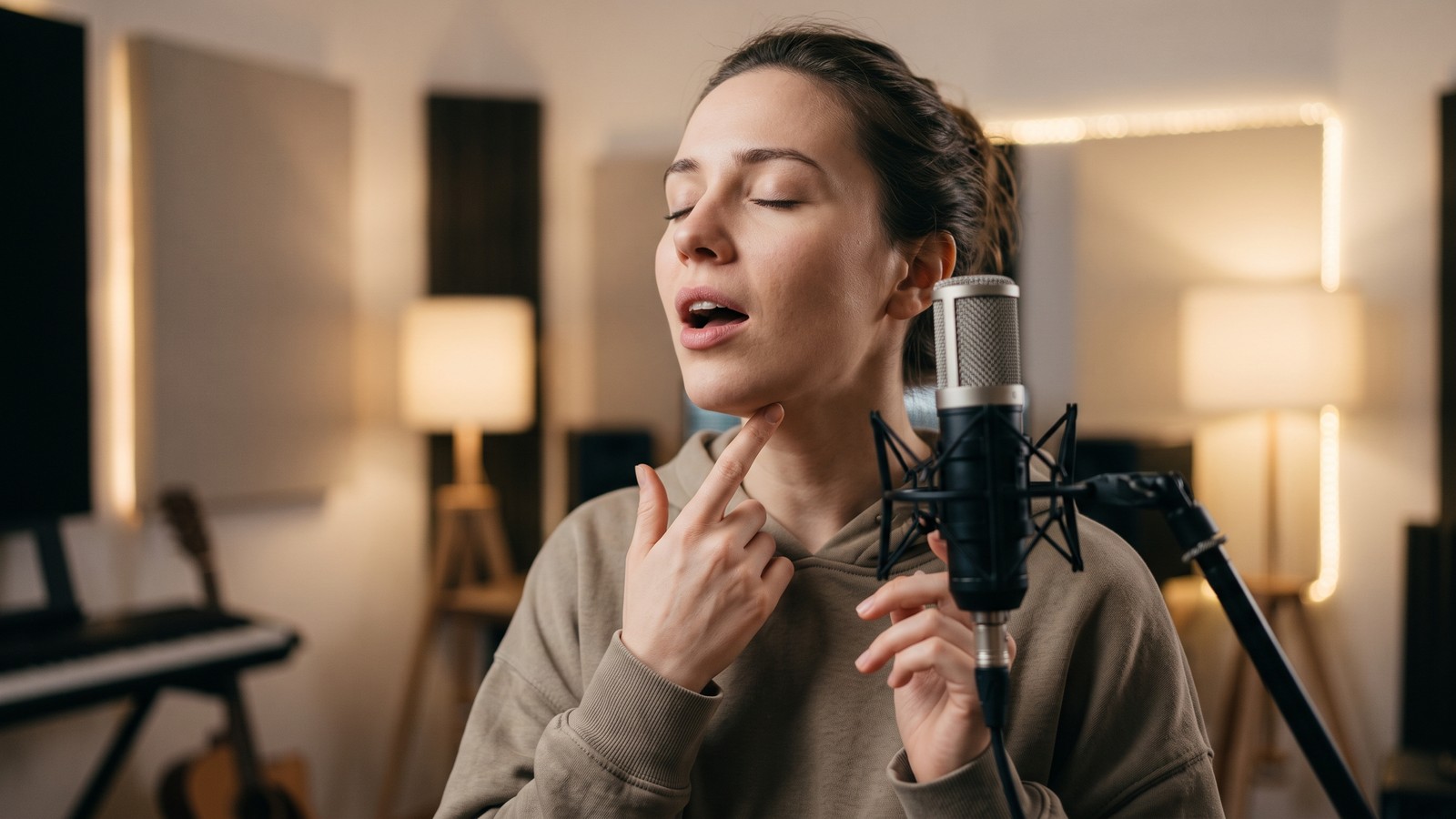
- Unstable tongue position and changes in the shape of the throat. Sustained singing requires the resonating space to remain consistent. If the tongue root shifts backward, the acoustic impedance of the vocal tract changes immediately. The vocal folds lose their usual airflow resistance, and stable closure is disrupted.
- Uneven breath support. If the abdominal wall, lower back, and rib muscles release the breath in bursts, subglottal pressure begins to fluctuate. These pressure changes make it difficult for the vocal folds to maintain a steady vibration. For a closer look at this coordination, see our guide to vocal support and breathing.
- Muscle tension around the larynx. Tight pharyngeal constrictors, a clenched lower jaw, and tension in the shoulders restrict the laryngeal cartilages and limit their movement.
- Singing at the boundary between vocal modes. Trying to sing a metallic note too quietly and without enough compression can produce a dry cracking effect. Likewise, suddenly switching into a breathy tone or falsetto without stable body support can make the note lose density and drift. Our overview of Complete Vocal Technique and vocal modes explains this balance in more detail.
- Swelling and tissue fatigue. With laryngitis, a cold, or prolonged vocal overload, the mucosa may thicken, making consistent contact between the edges of the vocal folds difficult. If hoarseness or discomfort persists, pause training and seek assessment from a qualified medical professional. You can also review the general warning signs in our guide to safe vocal recovery.
2. Step-by-Step Guide: How to Stop Your Voice from Shaking When Singing
To reduce vocal shaking and learn to sustain a steady, solid note, work through the following steps:
- Stabilize the shape of the vocal tract. Keep the space inside your mouth consistent until the musical phrase is fully finished.
Self-check: gently place a finger under your lower jaw, on the soft area of the floor of the mouth, and sustain a vowel or an "M" sound. The tissues under the jaw should remain soft. If your finger is pushed outward, the tongue root is likely tense and pressing down on the larynx. - Even out the exhale. The abdominal muscles should move inward smoothly, without sudden pushes. Practice a steady airflow on a long "sss" or the voiced fricative "zzz."
- Use SOVT exercises. A semi-occluded vocal tract, such as phonating through a thin straw or doing a lip trill, creates helpful back pressure. This air cushion allows the vocal folds to vibrate more efficiently and can quickly reduce shaking in the voice.
- Add the necessary twang. A controlled narrowing above the vocal folds helps the sound stay focused through acoustics and airflow, reducing the urge to press at the throat.
- Maintain a clear vocal mode. If a dense sound becomes unstable, adjust the volume slightly and reconnect the breath support. The vocal folds need a consistent balance of air pressure and closure.
Please note: If the unstable sound is accompanied by throat irritation, soreness, or coughing, stop immediately and give your voice time to rest.
Want to test your voice right now? We can do a quick three-minute review: check the area under your jaw and test your exhale on "sss" to identify the likely cause of vibration on your problem note.
Trial lesson
Want to understand what your voice can do?
Book a diagnostic trial lesson with a teacher: we’ll listen to your voice, highlight your next steps, and suggest a clear plan. It costs nothing and doesn’t commit you to anything.
No payment, no pressure
Related materials

How to learn to sing from scratch: a simple guide for future vocalists
Any adult can learn to sing, regardless of age or starting level. The voice is not a closed club for the chosen few, but a physiological in…

Complete Vocal Technique (CVT): A Modern Science-Based Approach to Voice
Traditional vocal training still contains many vague metaphors: “send the sound into the dome,” “sing on a smile,” or “feel a column of air…

How to Recover Your Voice After Vocal Strain and Release Throat Tension Safely
What to do when your voice becomes hoarse, strained, or disappears after heavy use: voice rest, key mistakes to avoid, gentle breathing, an…

How to Sing Beautifully: A Beginner-Friendly Guide
A practical beginner’s guide to developing your voice, breath coordination, pitch, and vocal freedom safely and without unnecessary tension.

How to Get Your Voice Back: A Step-by-Step Guide to Safe Vocal Recovery
What to do when your voice becomes hoarse or disappears: warning signs, voice rest, gentle breathing, and a cautious return to sound withou…

Singing Lessons for Adults: How to Start from Scratch and Stop Feeling Shy
Can you start vocal training as an adult? This guide addresses common beginner fears, explains how modern singing lessons work, and explore…