How to Learn Jazz Singing Remotely: Online Vocal Guide for Beginners
Article
Jazz often feels like a private club for the chosen few. Beginners may think they need to be born in New Orleans, have a naturally smoky voice, or master complex theory before singing standards.
The good news: jazz vocal is a learnable combination of vocal technique, coordination, rhythm, listening, and musical logic. Today, you can study all of it online from home.
What makes pop-jazz vocal different?
Unlike classical singing, jazz gives much more room for individuality. Your voice becomes an instrument — like a saxophone or trumpet — with its own color, phrasing, and timing.
- Vocal modes and colors. Modern methods such as Complete Vocal Technique and Estill Voice Training help singers switch consciously between soft, airy sound and a denser, more powerful tone.
- Rhythmic freedom. Jazz is not sung mechanically on the beat. You learn to sing behind the beat or gently push the phrase forward to create swing.
- Improvisation and scat. Scat singing turns your voice into a solo instrument and teaches you to think like a musician.
- Microphone technique. In jazz, the microphone is an expressive tool: it helps create intimacy, subtle dynamics, and soft subtonal colors.
How online jazz vocal lessons work
1. Setting up your space
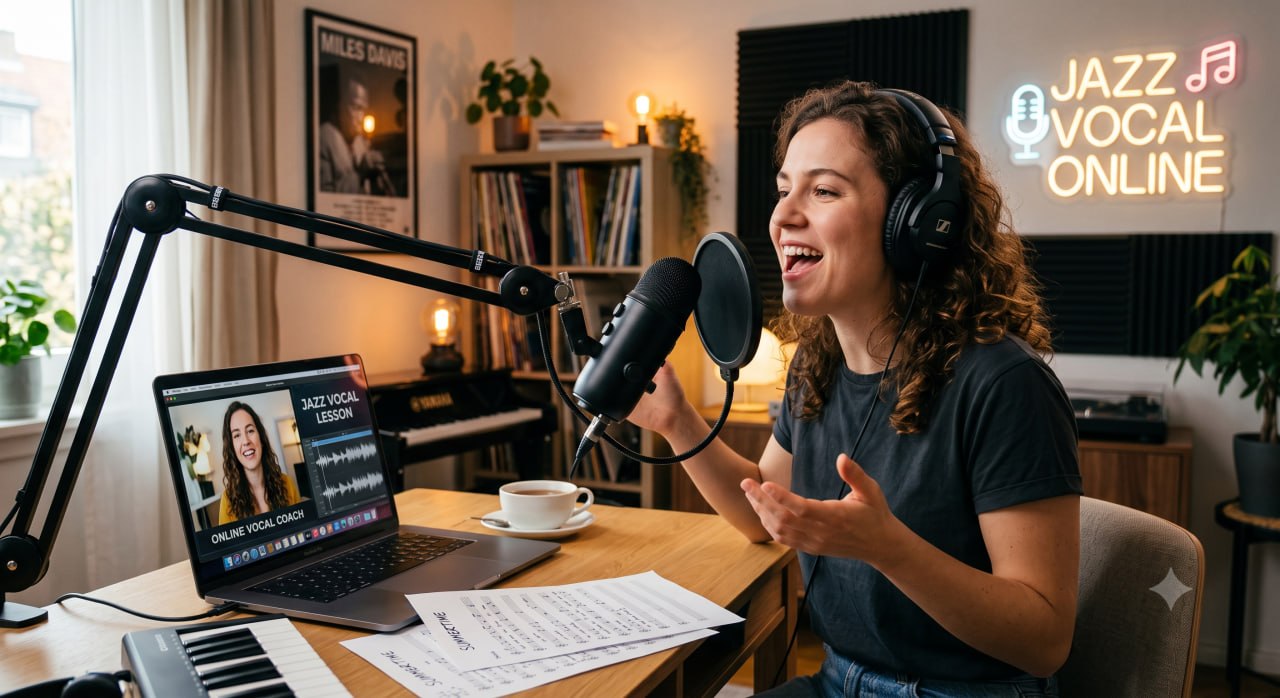
You need stable internet, a laptop or tablet, and an external microphone. Even a simple USB mic or lavalier is usually better than a built-in laptop microphone.
2. Warm-up and vocal setup
Each lesson starts with vocal exercises. Through the camera, the teacher watches posture, breathing, articulation, and unnecessary body tension.
3. Technical exercises
You practice jazz phrasing, scales, glissando, ear training, and voice coordination.
4. Working on a jazz standard
The main part of the lesson is repertoire: form, harmony, lyrics, accents, and your personal interpretation.
Why online lessons are helpful for beginners
Home feels safe. Many beginning singers find it easier to overcome the fear of making a “wrong” sound when they are in their own room rather than in an unfamiliar studio.
Practice: train your ear with jazz standards
The best jazz textbook is listening to great recordings. Compare different versions of the same standard and notice how phrasing, dynamics, and timing change the meaning.
- Summertime: Ella Fitzgerald & Louis Armstrong / John Coltrane.
- My Funny Valentine: Chet Baker / Miles Davis Quintet.
- Fly Me to the Moon: Frank Sinatra / Anita O'Day.
- Autumn Leaves: Eva Cassidy / Cannonball Adderley & Miles Davis.
- Georgia on My Mind: Ray Charles / Billie Holiday.
Self-practice task: choose one standard, listen to both versions three times, then sing the chorus first in the manner of one performer and then in the manner of the other. It will expand your vocal palette.
How to start now
- Copy great singers — at the beginning, imitation is how you collect vocal tools.
- Record yourself: external listening is more honest than the voice you hear inside your head.
- Find a coach you trust: a good teacher will not break your natural tone but will help you discover jazz colors that suit your voice.
Jazz is not only about perfect notes. It is about freedom, sincerity, and dialogue with the listener — and you can begin that dialogue online from anywhere in the world.
Related materials
Singing Lessons for Adults: How to Start from Scratch and Stop Feeling Shy
Can you start vocal training as an adult? This guide addresses common beginner fears, explains how modern singing lessons work, and explore…
How to Get Your Voice Back: A Step-by-Step Guide to Safe Vocal Recovery
What to do when your voice becomes hoarse or disappears: warning signs, voice rest, gentle breathing, and a cautious return to sound withou…
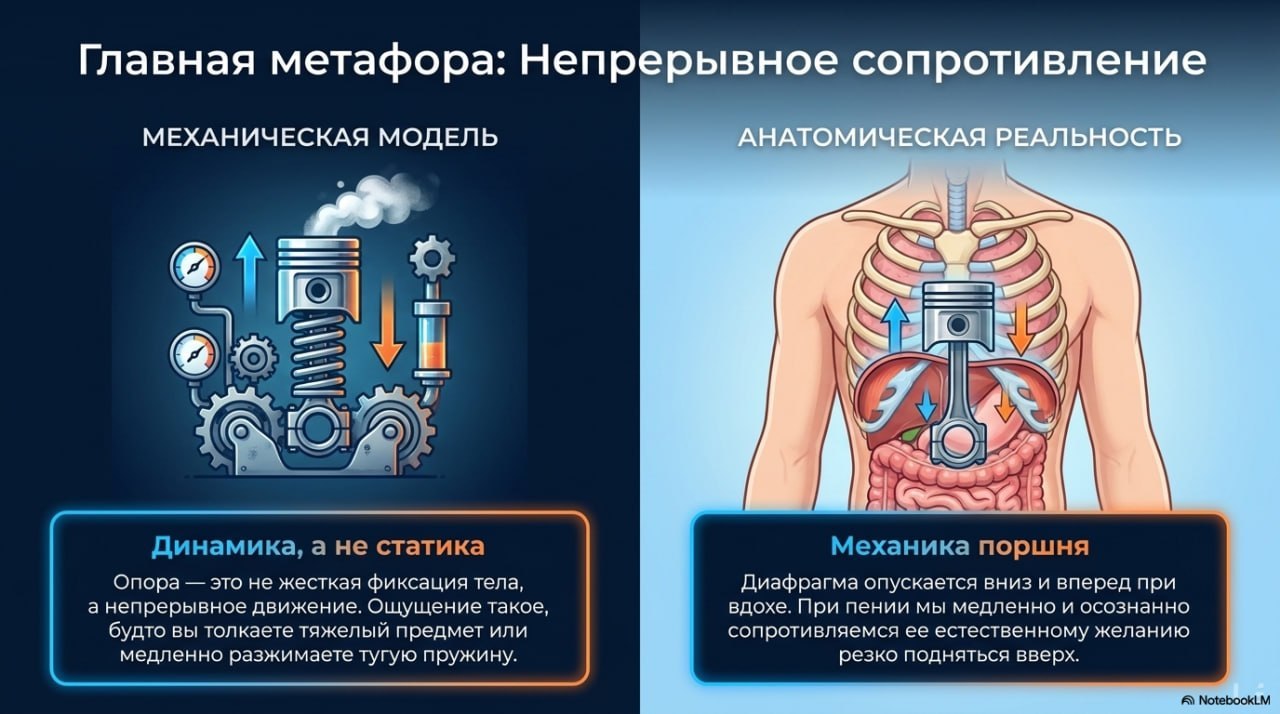
What Is Vocal Support?
article > section:nth-of-type(2){display:none}A short visual guide: vocal support is not stiffness or rigid body fixation, but continuous, …
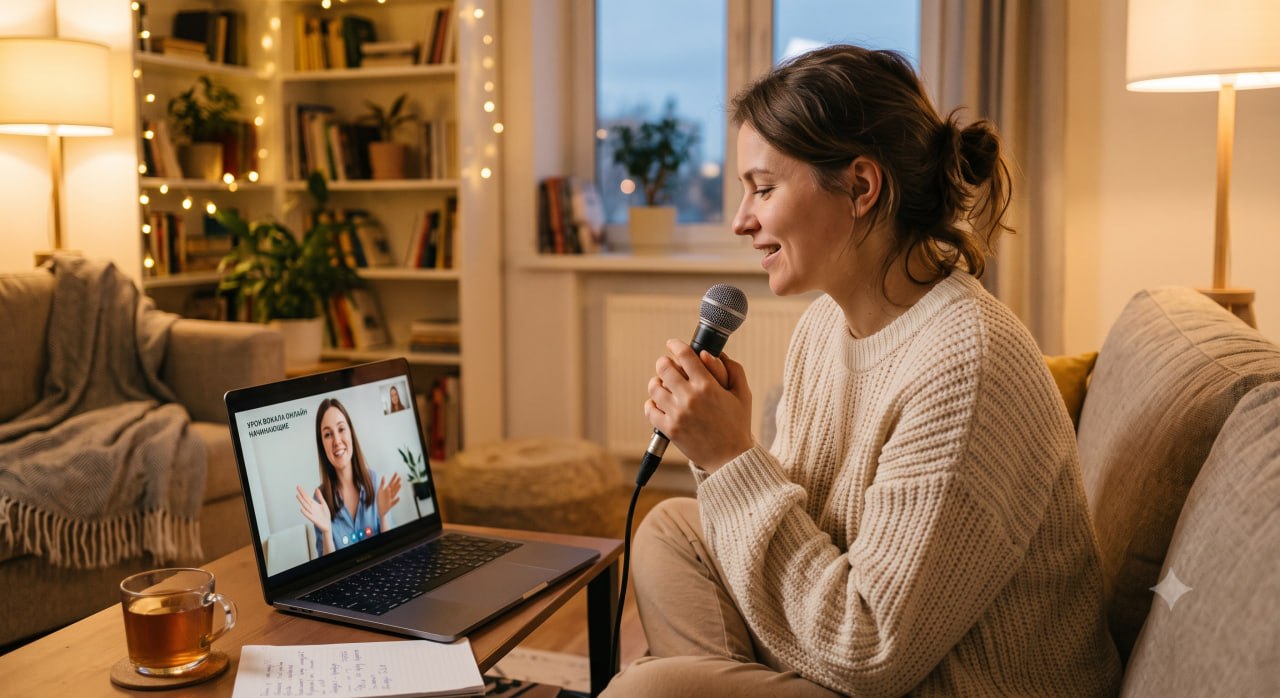
Vocal Lesson for Adult Beginners: From First Steps to Extreme Techniques
You can learn to sing at any age. For adult beginners, awareness, favorite repertoire, and a comfortable online environment often become po…
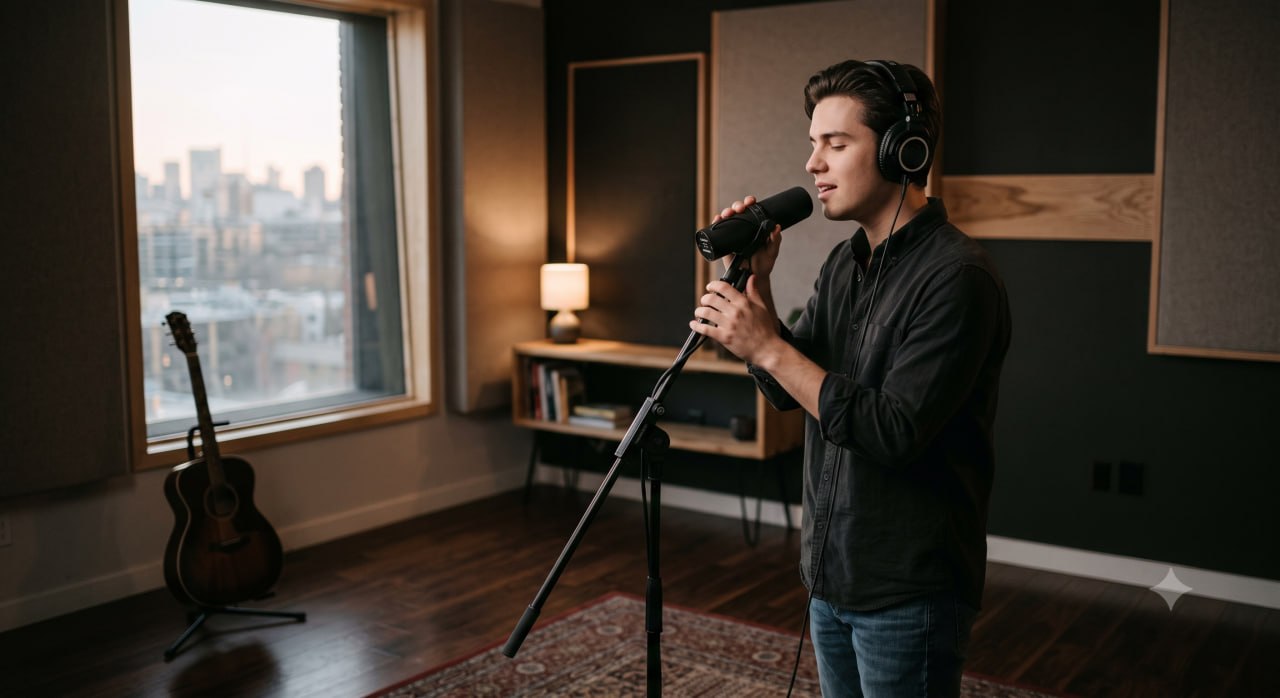
Songs for Your First Vocal Lesson: Top 10 Beginner-Friendly Tracks
What song should you choose for your first vocal lesson? The most important thing is not difficulty or impressive high notes, but a song yo…

Vocal Support and Breathing: Stop Throat Tension and Sing Freely
Everyone who begins singing eventually hears the phrase “sing with support.” But what does that mean in practice, and how can y…