Anatomy of Vocal Mix: M1, M2 and the Biomechanics of Density
Vocal Mix Biomechanics Slides
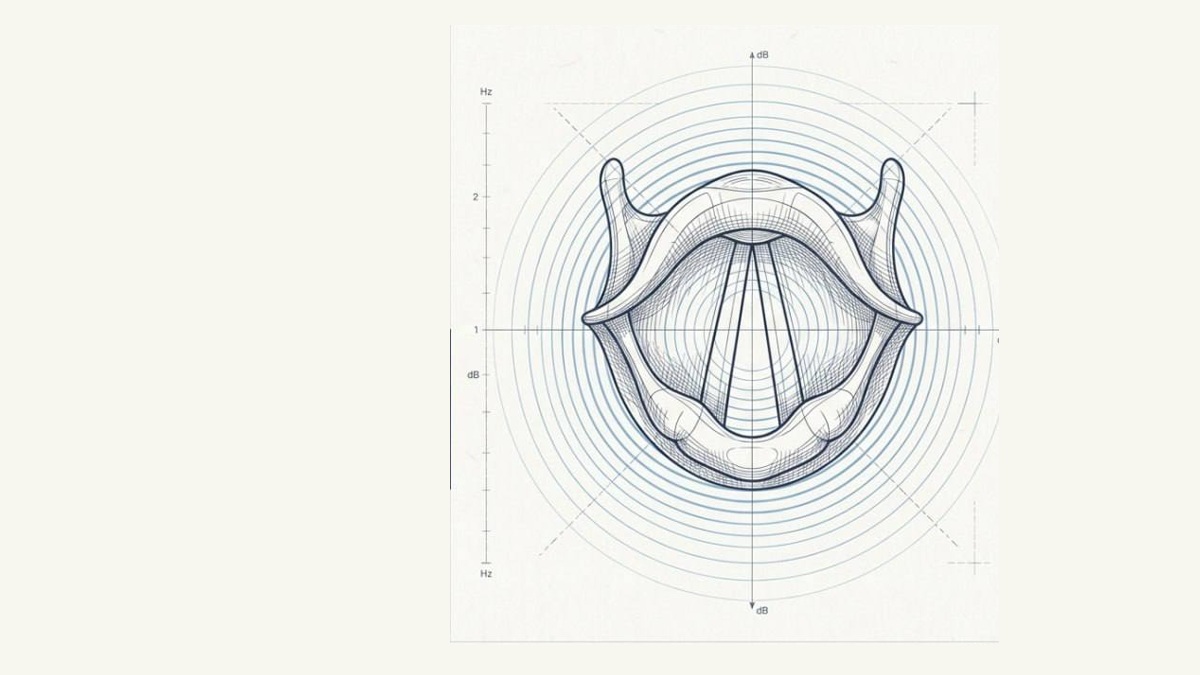
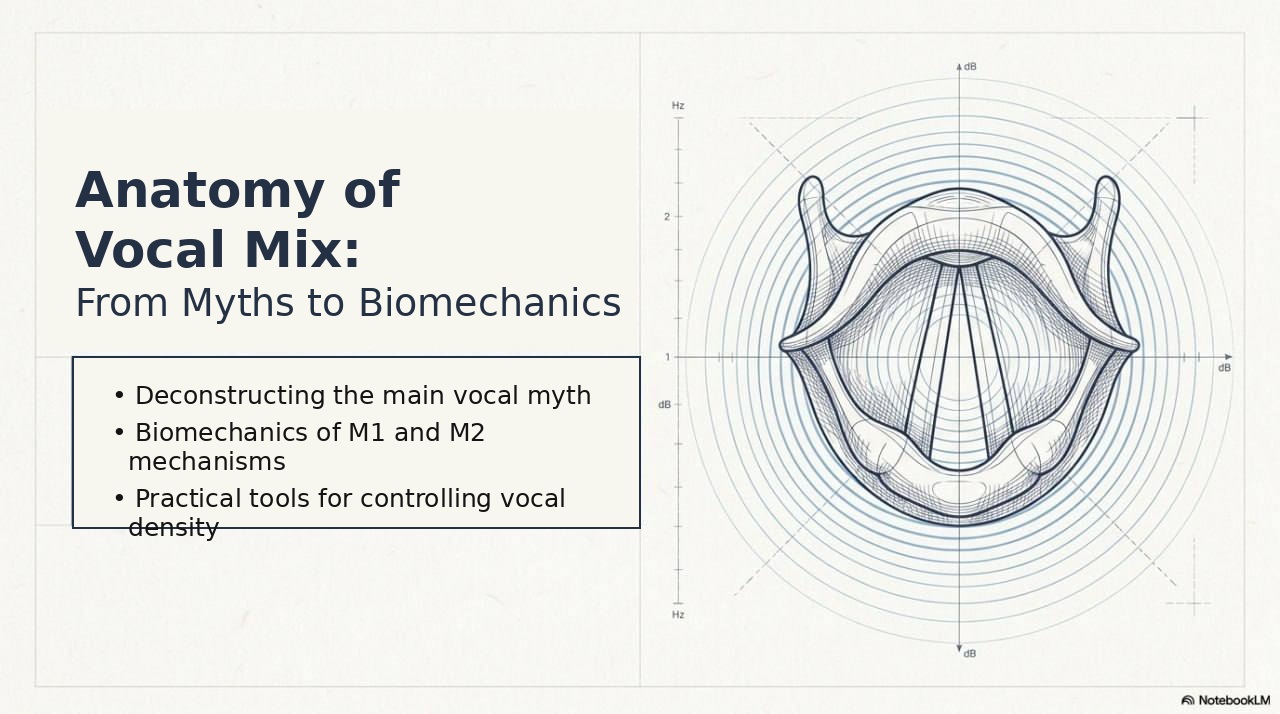
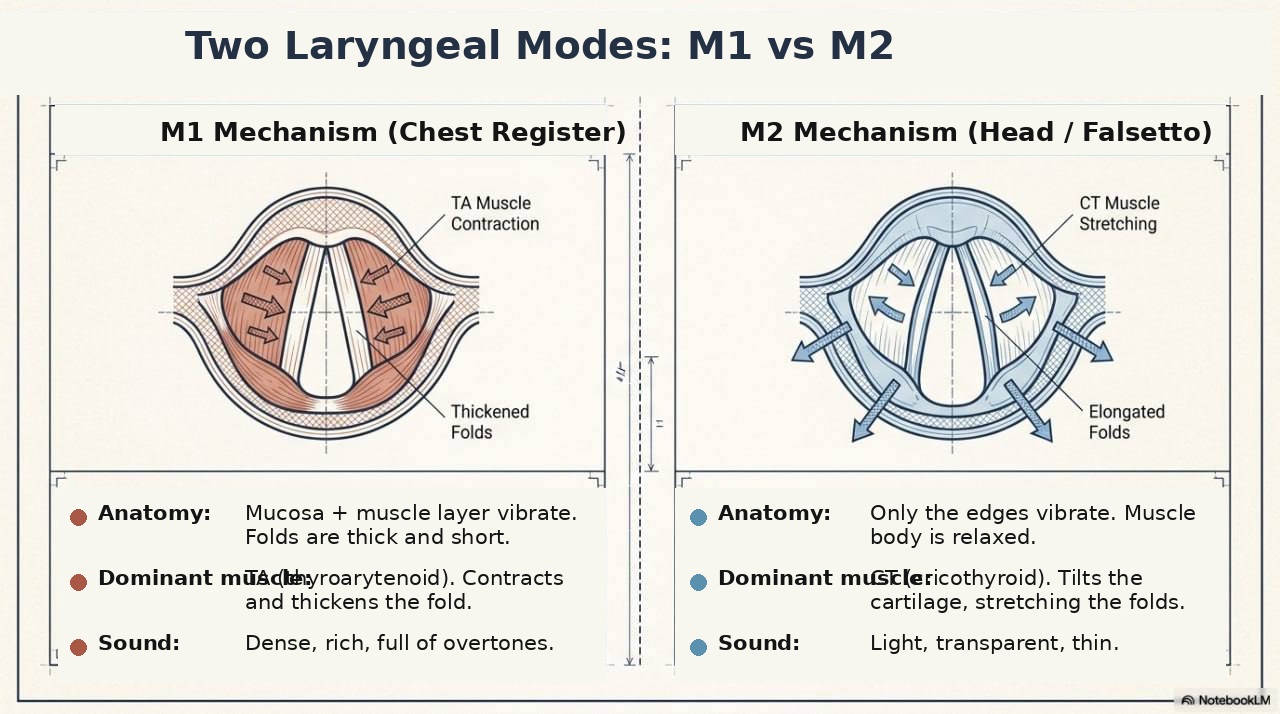
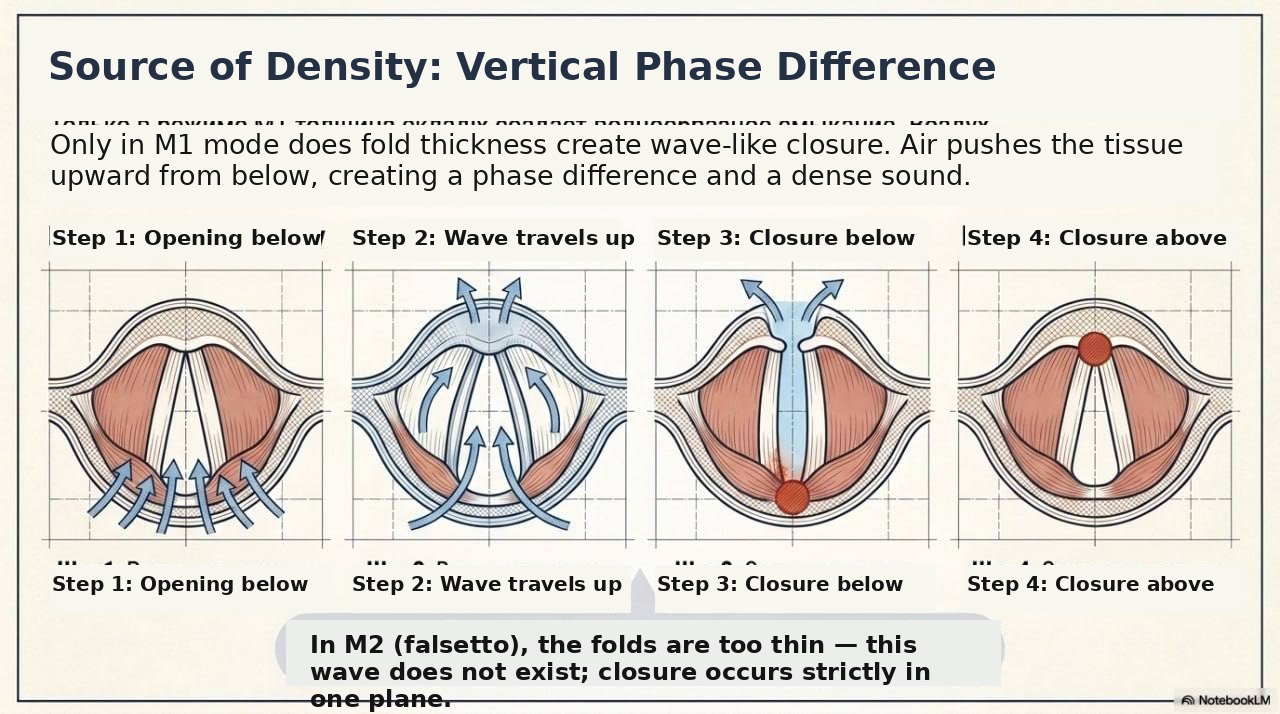
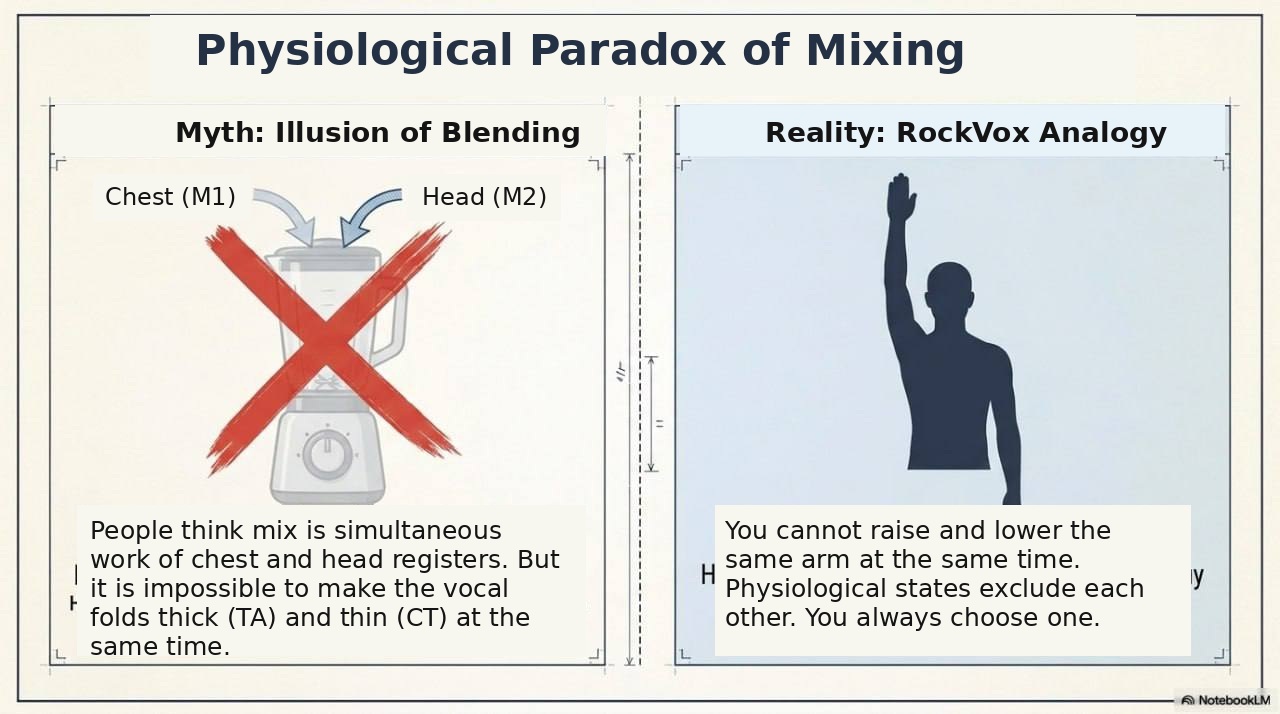
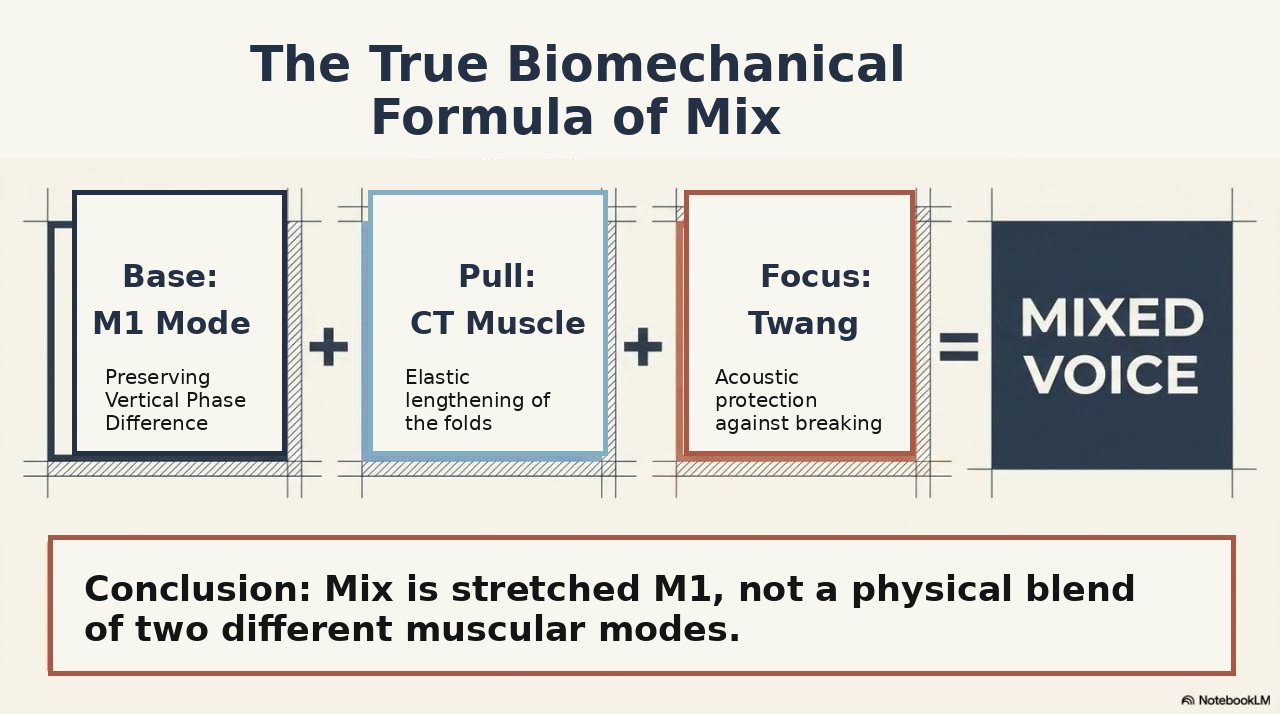
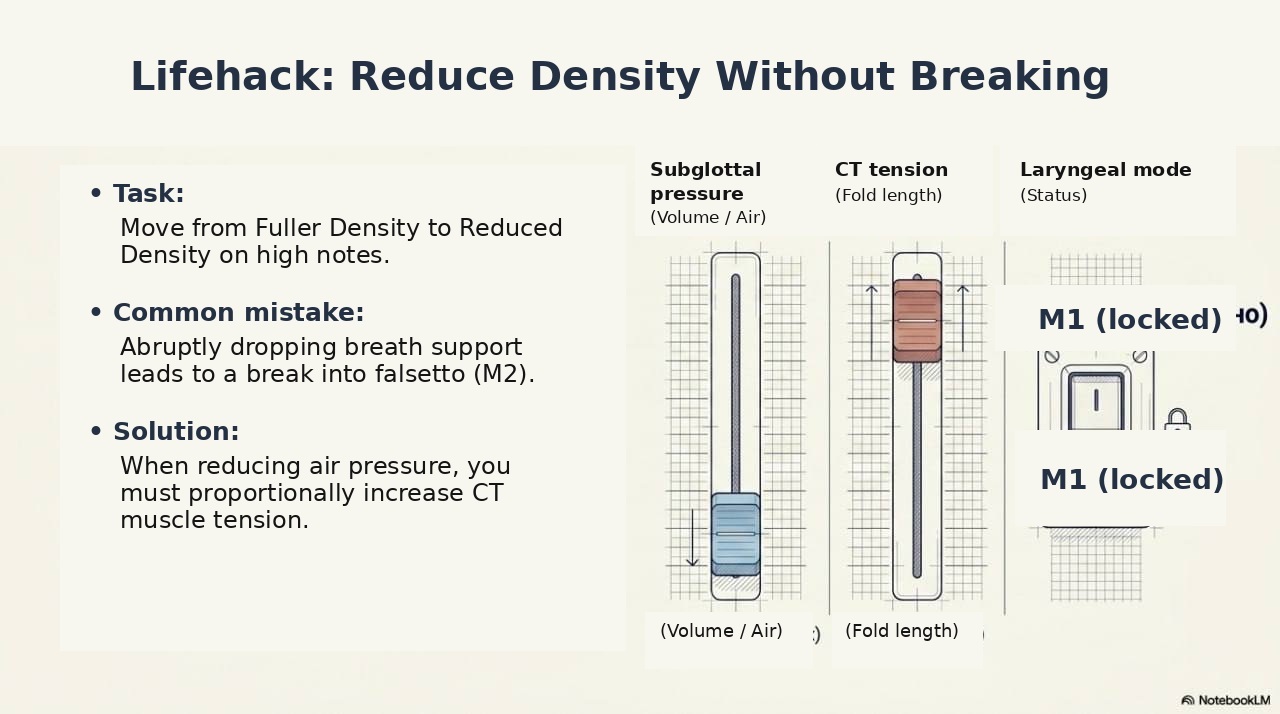
A visual guide to vocal mix: how M1 and M2 differ, why mix is not a literal blend of two registers, and how to reduce vocal density without breaking into falsetto.
Trial lesson
Want to understand what your voice can do?
Book a diagnostic trial lesson with a teacher: we’ll listen to your voice, highlight your next steps, and suggest a clear plan. It costs nothing and doesn’t commit you to anything.
No payment, no pressure
Related materials

Why Your Voice Shakes When Singing: Physiology and How to Stop It
When a singer sustains a long note and the sound begins to vibrate or break involuntarily, audio-analysis software may detect abnormal jitt…

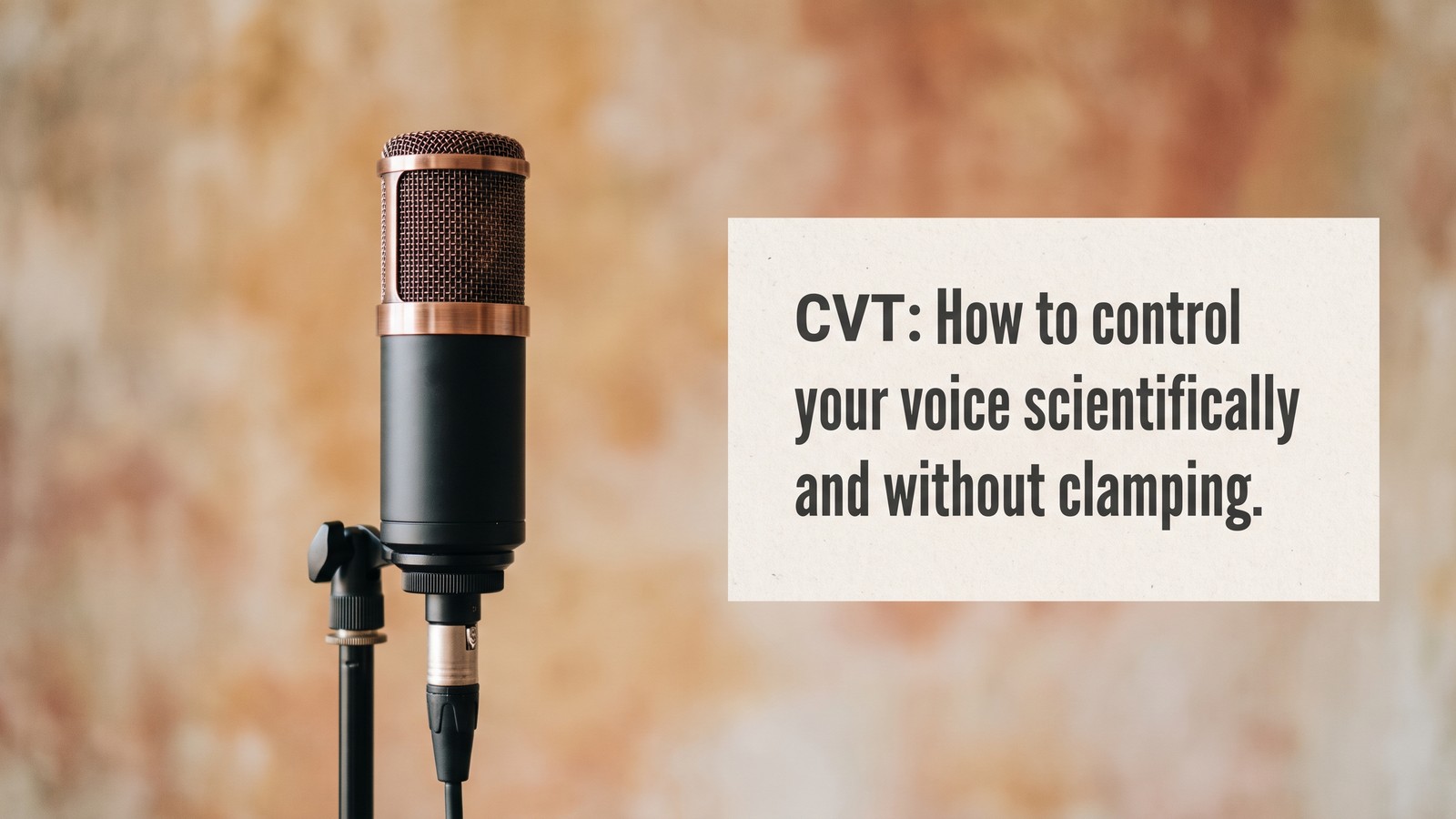
Complete Vocal Technique (CVT): A Modern Science-Based Approach to Voice
Traditional vocal training still contains many vague metaphors: “send the sound into the dome,” “sing on a smile,” or “feel a column of air…

How to learn to sing from scratch: a simple guide for future vocalists
Any adult can learn to sing, regardless of age or starting level. The voice is not a closed club for the chosen few, but a physiological in…

Vocal Distortion Lessons: How to Learn Extreme Vocals Without Damaging Your Voice
Vocal distortion adds fire, density, and a signature rasp to the sound. But safe extreme vocals are not built on shouting — they require a …

Fun diction warm-up
A fun diction warm-up: a short exercise for clearer articulation and warming up the speech apparatus.

Exercises for Diction and Voice: A Daily Practice Plan
Improve diction, articulation, breath support, and vocal clarity with a practical 15–20 minute daily routine from Music Lab voice coaches.